Student's Activities and International Exchange
Student Work and Activities
The fast-growing fields of life science and biotechnology seek internationally active individuals who are able to open up a new era. By creating an independent study environment, the School of Life Science and Technology supports a variety of activities in which students take initiative and proactively communicate with other students and researchers around the world.
Learn by yourself, think actively, and materialize the idea with originality and ingenuity
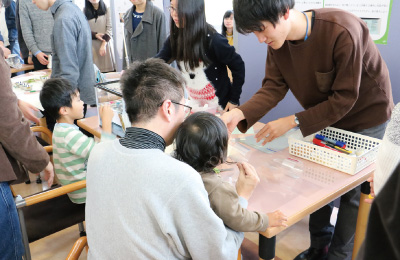
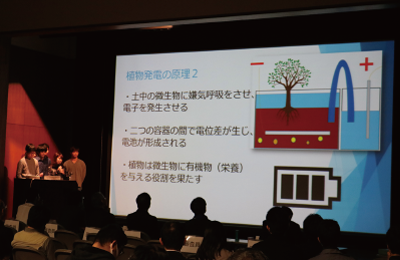
Students at School of Life Science and Technology are trained to materialize the idea with originality and ingenuity from the first year of the bachelor’s degree program in courses such as Processes for Creation in Science and Technology, International Bio-Creative Design, Fundamentals of Innovation Creation, and Practices of Innovation Creation. There are also opportunities to participate in presentation contests and give a speech on their achievements.
Science Tokyo Team wins another gold medal at iGEM
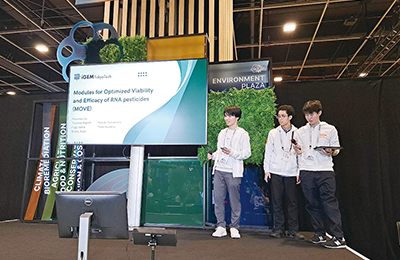
Approximately 200 teams of students from around the world participate in International Genetically Engineered Machine (iGEM), an international competition in synthesis biology. The former Tokyo Tech team, which mainly consisted of students from the School of Life Science and Technology, was famous for its record by winning the 11th consecutive gold medal. In 2025, Science Tokyo team was newly organized and, to our delight, won the gold medal.
Looking to the future of life science with world-famous researchers
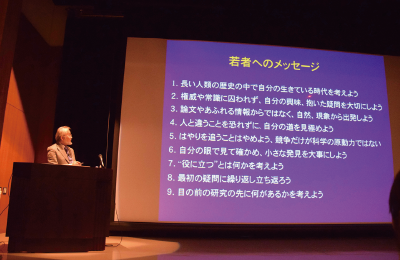
With the hope of becoming world-class investigators, undergraduate and graduate students as well as young researchers can enrich their perspectives through participation in Bioscience and Biotechnology International Symposia and Top Leaders Forums where they can meet superb academics from home and abroad.
Join workshops and training seminars abroad
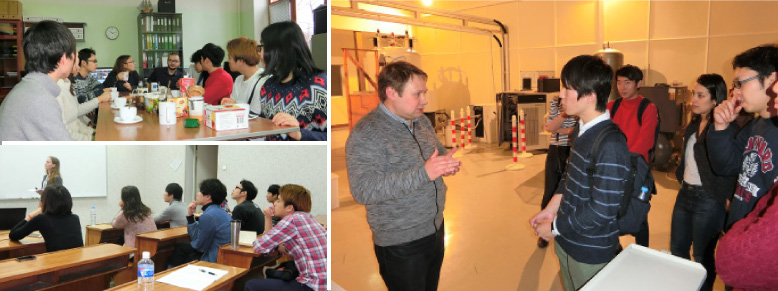
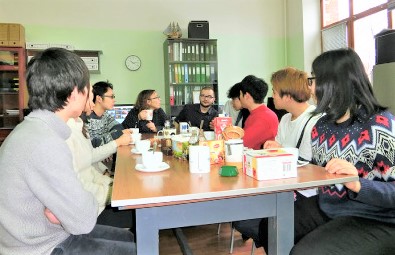
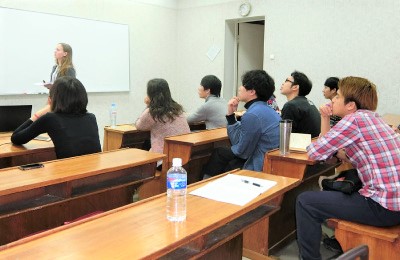
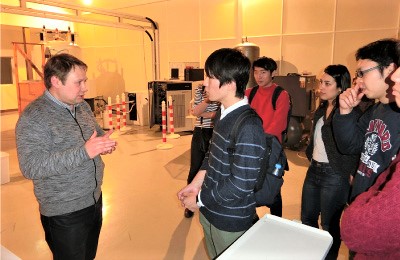
Science Tokyo offers students the opportunity to attend overseas workshops and training seminars in order to foster global leadership.
Exposure to cross-cultural environments while studying abroad

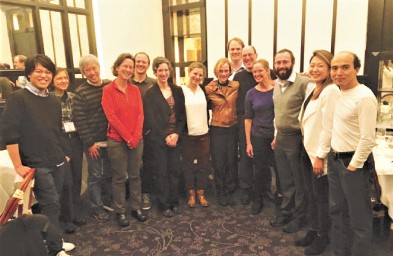
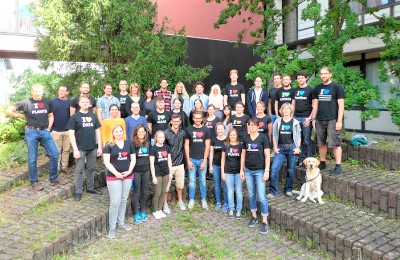

International internships are among the many ways in which students have the opportunity to visit universities and research institutes abroad. These programs aim to develop human resources in the field of life science and individuals capable of playing an active role in the world.
Study abroad experiences
KAWAURA, Hinata
The three months I spent at the Gilestro Laboratory at Imperial College London was a hugely valuable experience. In the long-established academic culture of the UK, I observed that anything essential to the pursuit of academic excellence was respected above everything else. This meant that, unlike in Japan where students seldom counter the opinions of faculty members, students in the UK did not hesitate to engage in a battle of logic with their instructors. I found this setting extremely powerful, as it enables discussions among groups of individuals to come up with answers that would otherwise not be possible. I learnt a lot from my internship and intend to build on this experience as I continue to pursue my research.
IMADA, Takashi
I worked as an intern for five months at the Pamela Silver Laboratory at Harvard Medical School. During my stay, not only was I able to acquire new skills in imaging and analysis, but I was able to meet a diverse community of researchers and observe the different ways in which Japanese and American universities and laboratories are organized. This experience has impacted the way I view research as well. The pursuit of science should not be about following trends set by others. It should be about taking on unique and edgy research that explores new fields.
Students talk about their life in the lab
OKUI, Mio doctoral student
I have discovered an analogue of the antibiotic found in my laboratory and have been conducting research on it. As I have longed to be a researcher, this university is an ideal place for me because it offers comprehensive supports for research activities, such as the B2D scheme, which allows students to join laboratory one year early and receive consistent support through to the doctoral program. I am enjoying my research here, blessed with kind and supportive professors and lab mates.

Rahma Wirdatul Umami master's student
I first joined the Ogura Laboratory through a collaboration between my undergraduate supervisor at Universitas Indonesia and Professor Ogura. I chose to return to Science Tokyo for my graduate studies because its research culture and environment can nurture my growth as a researcher. The university and the lab provide opportunities, facilities, and flexibility to explore my research interests while allowing me to enjoy student life in Japan. Although the journey has its challenges, I am supported by my colleagues in conducting research on ALA-PDT for cancer therapy, and I hope that my work will one day bring meaningful benefits to society.

AGATA, Masashi undergraduate student
I am working on synthesizing new compounds to improve photosensitizers expected to be applied in cancer treatment. Although experiments don't always go as planned and can be frustrating, the bright and supportive atmosphere created by my professors and lab mates helps me work hard every day. With gratitude in my heart, and believing that the compounds I synthesize will contribute to the future of cancer treatment, I will continue my research with perseverance.